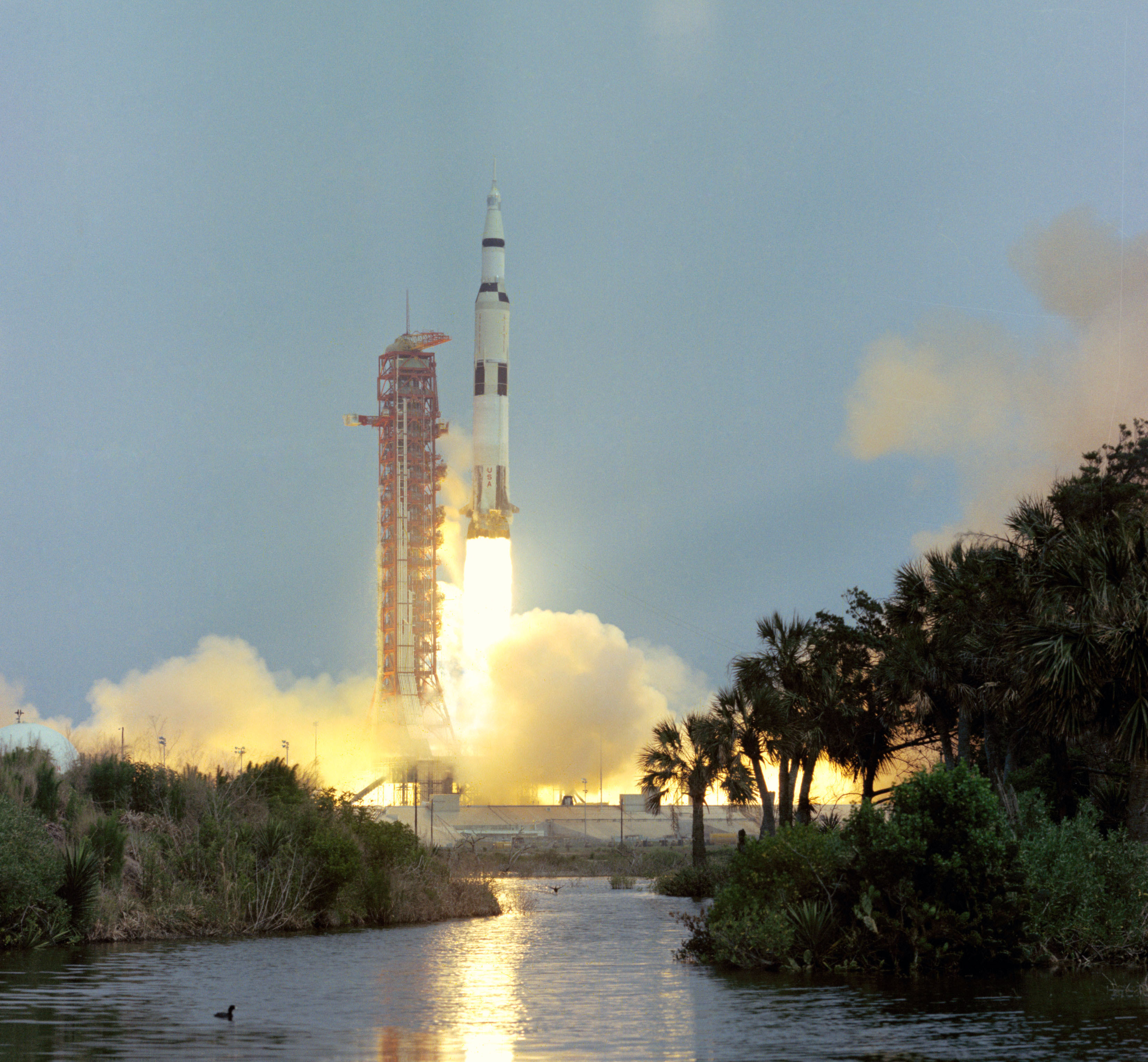
Was Apollo 13 a Failure or a Success?
By Kalei Chesney · 28 May 2021
An A-Level EPQ essay analyzing the Apollo 13 mission across four key dimensions — arguing that despite failing its primary lunar landing objective, the mission represents one of history's greatest engineering and human achievements.
Apollo 13 — April 1970 · "Houston, we have a problem."
Apollo 13
Mission
Apr 1970
Launch Date
3 Astronauts
Crew
Safe Return
Outcome
Background
The Apollo 13 Moon Mission was quite possibly one of the most historic space events of the 20th Century. The April 1970 flight — scheduled to land Jim Lovell, Fred Haise, and Jack Swigert on an unexplored area of the lunar surface — never made it to the Moon. A manufacturing fault in one of the oxygen tanks led to the near-catastrophic failure of the mission, threatening the lives of all three astronauts.
Ultimately, they returned to Earth safely — but the original mission plan was never completed. This essay analyzes four key areas that determined the final outcome of Apollo 13: the technical failure, the engineering rescue, the NASA organisational response, and the lasting legacy of the mission.
The Four Key Areas of Analysis
Technical Failure Analysis
A manufacturing defect in oxygen tank No. 2 caused it to explode 56 hours into the mission, disabling two of the three fuel cells and crippling the Command Module's power, water, and oxygen supply. The root cause was traced to a damaged thermostat switch from a pre-launch test — a failure that slipped through quality assurance processes.
Engineering Rescue — "The Lifeboat"
Mission controllers and the crew improvised the Lunar Module Aquarius as a "lifeboat" for the return journey. Critical engineering challenges included CO₂ scrubber adaptation (using materials only available aboard), power budgeting to preserve re-entry battery reserves, and a manual PC+2 burn for trajectory correction — all performed without computer guidance.
NASA Organisational Response
The mission demonstrated the strength of NASA's Mission Control procedures and real-time problem-solving culture. Flight Director Gene Kranz's leadership — "Failure is not an option" — exemplified the organisational commitment to crew safety over mission success. Post-mission review led to significant redesigns of the oxygen tank system for subsequent Apollo flights.
Legacy & Conclusion
Apollo 13 is widely regarded as a "successful failure" — a phrase that encapsulates how an aborted mission became one of NASA's finest hours. The mission demonstrated humanity's capacity for ingenuity under extreme pressure, strengthened public support for NASA, and produced lasting improvements in spacecraft safety design that benefited all subsequent Apollo missions.
Essay Conclusion
Apollo 13 was both a failure and a success — a failure in its primary objective of lunar landing, but an extraordinary success in engineering problem-solving, crew survival, and the demonstration of human resilience. The mission's outcome depended not on a single heroic act, but on the collective competence of hundreds of engineers, flight controllers, and three astronauts working together under impossible circumstances. By any meaningful measure, Apollo 13 was NASA's finest hour.
Want to read the full paper?
Click to send a request and I'll get back to you with a copy.

