iPhone 2G — Management & Law Technical Report
FEEG1201 · Group Report · December 2022 · University of Southampton
A technical and business analysis of the original iPhone (2007) — examining engineering measures, standards, business strategy, competition, and the supply chain that made it one of the most successful consumer products in history.
$2.65T
Market Cap (2022)
2.2B+
Units Sold (to 2022)
1.23B
iPhone Users (2022)
27.2%
Market Share (2022)
Introduction
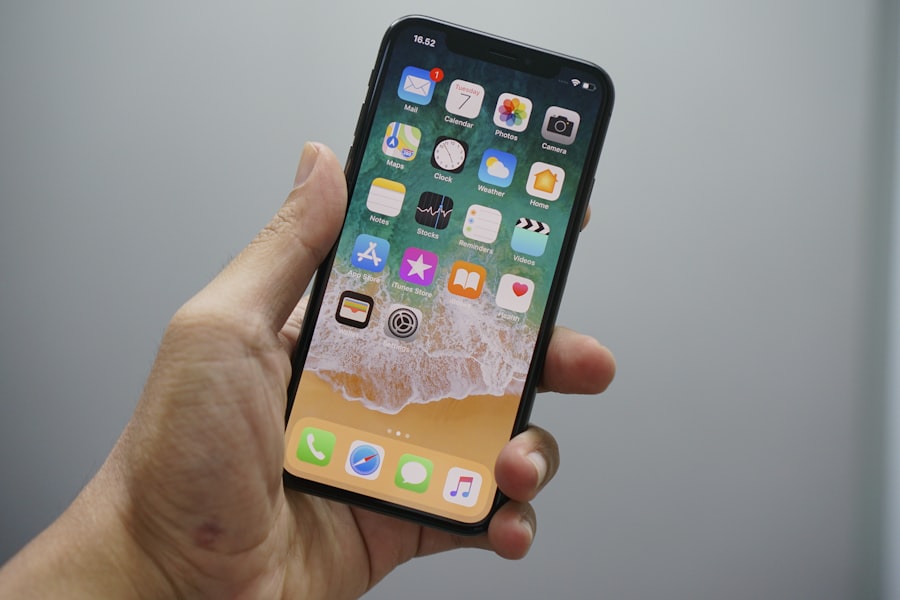
Apple Inc. is one of the most valuable companies in the world, with success driven primarily by the iPhone. Released on June 29, 2007, after Steve Jobs' announcement on January 9, 2007, the original iPhone 2G combined three products: a revolutionary mobile phone, a widescreen iPod, and the Internet in your pocket.
This report investigates the factors attributing to the iPhone's success through five quantifiable engineering measures, the significance of Apple's strategy and business model, and the resources Apple used to develop and manufacture the iPhone.
Kalei's Contribution
Co-wrote the Strategy section (40%) and Business Model & Competition section (60%) with Antoine Khoury. Also contributed to paper editing, referencing, and the conclusion. Brought forward the iPhone as the product choice for the report.
Product Definition — 5 Engineering Measures
Five quantifiable engineering measures were selected to evaluate the iPhone's product definition against competitors and ergonomic standards.
1. Grip Comfort & Pocket Size
A controlled study using a 7-point Likert scale determined optimal grip dimensions of 5.51" × 2.56" × 0.31". The iPhone (4.53" × 2.4" × 0.46") differs from the optimum by only 1.07% in width and 1.48% in thickness. The BlackBerry 8800 (4.49" × 2.6" × 0.55") exceeded optimal dimensions in both. iPhone surface area occupies a maximum of 32.4% of a user's pocket.
2. Battery Life (Cycles)
Lithium-ion batteries degrade to 80% capacity after ~300 cycles (~2 years of typical use). At the recommended 2 hrs screen time/day, approximately 2 battery cycles per week are consumed. Battery measured in cycles (not years) to account for usage patterns accurately.
Talk Time & Screen Ratio Comparison
- Talk Time (hrs)
- Standby (hrs)
3. Network Performance (Wi-Fi Throughput)
Wi-Fi throughput (not bandwidth) was used as the performance metric to reflect real-world conditions. The iPhone used IEEE 802.11b/g (5 Mb/s and 24 Mb/s respectively). Crucially, only the iPhone and BlackBerry 8820 offered Wi-Fi among 2006–2007 competitors — the Palm Treo 750, Samsung Blackjack, and Nokia E62 had none.
Max Wi-Fi Throughput by Device (Mb/s)
4. Screen-to-Body Ratio
The iPhone had a screen-to-body ratio of 52% — 66% larger than the Palm Treo 750's (31.3%) and 102% larger than the BlackBerry 8820's (25.7%). A larger ratio allows a bigger effective screen without increasing physical phone size, directly benefiting web browsing, media consumption, and the multi-touch interface.
5. Camera — Megapixel Count
Camera Resolution by Device (MP)
The iPhone's 2MP camera (1600×1200 resolution) was 53% greater than the Palm Treo 750 and Samsung Blackjack (1.3MP). The Nokia E62 and BlackBerry 8820 lacked cameras entirely.
Standards Compliance
| Standard | Relevance to iPhone |
|---|---|
| Ergonomic (Anthropometric) | Min hand breadth of 2.6" satisfied. iPhone width (2.4") within ergonomic range for all users |
| JPEG Image Compression (DCT) | Enables camera phones to store photos efficiently on limited storage |
| IEC 62133, IEC 60086-4:2007 | Li-ion battery safety tests and requirements |
| UL 1642 | Informed enclosed battery design — technician-only replacement to prevent fire/explosion risk |
Strategy — SWOT Analysis
Apple's strategy was to deliver the best customer experience through innovative products, targeting the middle-to-upper class and technology-interested younger generation. Apple continuously invested in R&D and expanded distribution to reach target customers with high-quality pre- and post-sales support.
Strengths
- •Clean, futuristic design with large multi-touch display
- •Wi-Fi connectivity — faster and cheaper internet than cellular
- •8-hour talk time vs. 4 hours for BlackBerry Curve 8300
- •Strong existing brand from iPod and Mac products
- •Largest screen-to-body ratio of any smartphone at launch
Weaknesses
- •No MMS, video recording, copy/paste, or front camera
- •No 3G — only 2.5G EDGE network (slower than competitors)
- •Non-user-replaceable battery (soldered components)
- •High price ($499–$599) limited to middle/upper class
Opportunities
- •5-year AT&T exclusivity contract (distribution lock-in)
- •~25% of US iPhones unlocked — demonstrated demand for carrier flexibility
- •Global release November 2007 — quarter of per-capita US sales in UK at launch
Threats
- •Nokia held ~40% market share at launch (435M phones sold)
- •BlackBerry offered MMS, 3G, and physical QWERTY keyboards
- •Single annual model limited target audience vs. multi-tier competitors
Business Model & Competition
2007 was a breakthrough year — 1.15 billion mobile phones sold (+16% on 2006). The iPhone launched in Q3 2007 alongside the BlackBerry Curve 8300 to a rapidly growing smartphone market. By Q4 2007, Apple achieved 6.5% market share, becoming the 3rd largest shareholder behind Nokia (52.9%) and RIM (11.4%).
Q4 2007 Smartphone Market Share
- Nokia
- RIM (BlackBerry)
- Apple
- Motorola
- Others
Value Proposition
The iPhone combined a widescreen iPod, mobile phone, and internet communicator into one device — "your life in your pocket." By merging three product categories, Apple dominated three industries simultaneously and built one of the world's most loyal customer bases.
Revenue Model
- • Annual generational releases — selling vs. leasing model; Apple avoids end-of-life disposal responsibility
- • iTunes — ongoing music, video, and media purchases
- • AppleCare — generated ~$1.3B in 2007
- • Battery replacement — $79 per replacement via AppleCare
Life Cycle & Pricing
| Model | Launch Price | Notes |
|---|---|---|
| iPhone 4GB | $499 ($717 today) | Discontinued September 2007 |
| iPhone 8GB | $599 → $399 | Price cut September 2007; discontinued July 2008 |
| BlackBerry 8300 (competitor) | $199 | 3× cheaper — but missing key iPhone features |
| iPhone 3G (successor, 2008) | $199 (8GB) | 3G, GPS, more storage — 10× units sold vs 2007 |
Resources — Supply Chain & Cost Structure
Apple's value network spanned California (design & software) and Taiwan/China (manufacturing & assembly). The estimated development cost was $150 million over 30 months ('Project Purple 2', initiated 2005). Manufacturing was outsourced entirely to Foxconn in Shenzhen, China.
Key Outsourced Components
- • Samsung S5L8900 — Application processor
- • Samsung K9MCG08 — Flash storage
- • Marvell W8686 — Wi-Fi
- • CSR BlueCore4 — Bluetooth
- • Infineon S-Gold-2 — Cellular (calls, SMS, data)
- • Apple 338S0297 — Only Apple-manufactured chip
Cost Structure
- • R&D: Variable sunk cost (specialist labour)
- • Components: Variable (competitive component market)
- • Labour (Foxconn): <$17/day for 12-hour shifts
- • Freight: Air (15 hrs) cheaper than sea (30 days)
- • Marketing: TBWA\Chiat\Day; "Think Different" campaign
- • Disposal: $0 — Apple offered free recycling/trade-in
By controlling design and software in-house while outsourcing manufacturing, Apple maintained product quality while minimising production costs. Direct retail (Apple Stores + AT&T) eliminated third-party margins and enabled Apple to control the full customer experience from purchase through support.
Design & Production Process
'Project Purple 2' began in 2005, inspired by Steve Jobs' vision to place the recently developed multi-touch display ('Model 035') into a mobile phone. Key design principles established early: "nothing should detract from the screen" — resulting in a front face with only a screen and one button.
Concept & Prototyping
Early 2004 – Dec 2006First prototype used resistive touchscreen; switched to capacitive for better responsiveness. Screen material changed just weeks before launch. Software redesigned for button-less navigation.
Manufacturing
Early 2007 – July 2008Components assembled at Foxconn, Shenzhen. Task specialisation maximised production efficiency. Each unit tested post-assembly before boxing and shipping.
Market Launch
29 June 2007Released at $499–$599. Apple Stores offered in-depth workshops. Genius Bar and One to One program supported customer adoption.
Disposal
OngoingApple offered free device recycling — trade-in of old handset for discount on new purchase. $0 disposal cost to consumer.
Conclusion
The iPhone's success resulted from the combination of strong quantifiable engineering measures (screen-to-body ratio 102% greater than BlackBerry, Wi-Fi when competitors had none, superior camera, ergonomic compliance), an effective premium business model, and tight control of the value chain from design to retail.
Analysis of quantifiable measures distinguished the advancements of the iPhone and the value proposition it held for customers. By combining impressive features, sleek design, user-friendly interface, and an effective business model, Apple created a revolutionary product that permanently reshaped the smartphone market — described as "your life in your pocket."
Want to read the full paper?
Click to send a request and I'll get back to you with a copy.

